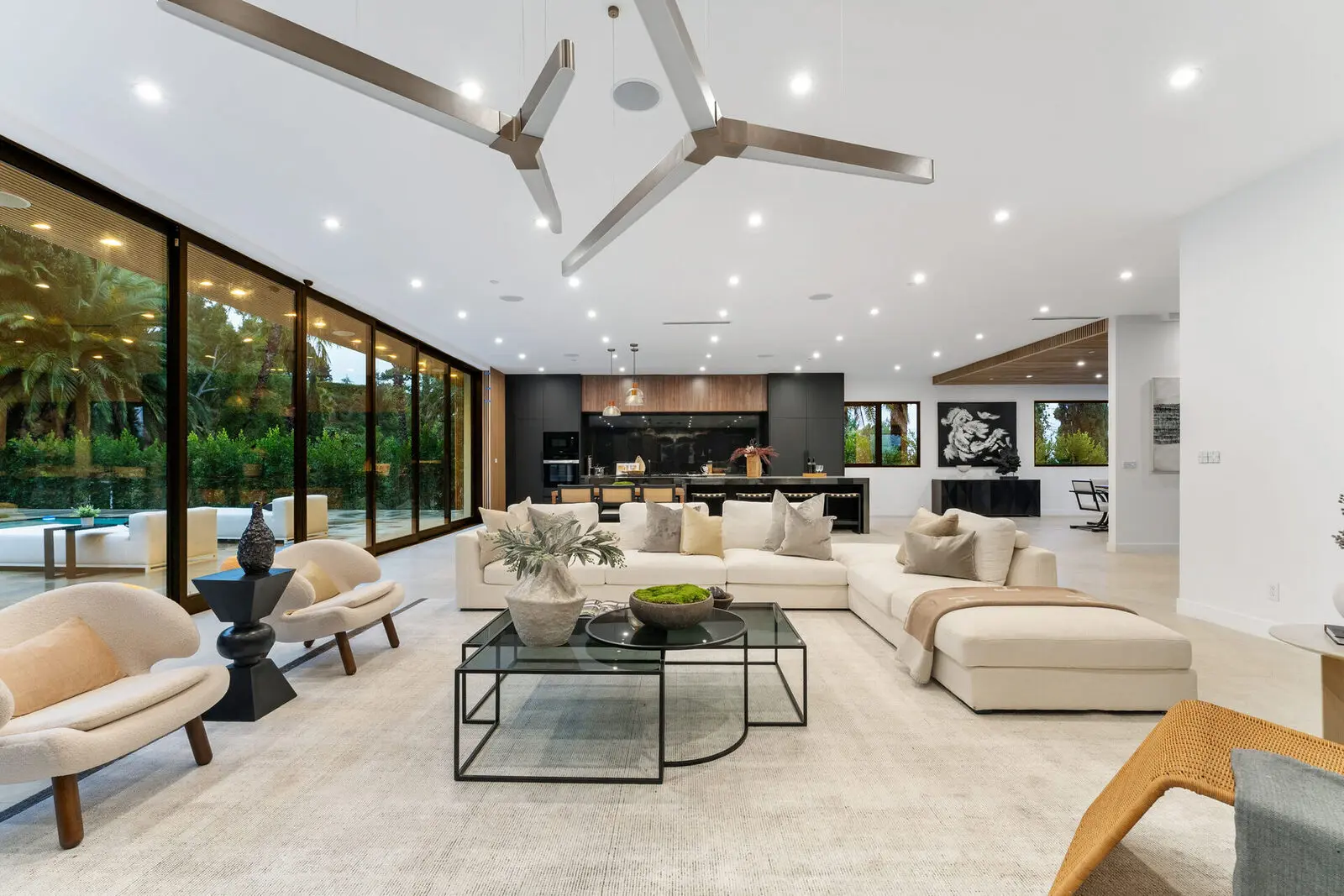
Ten years ago, a 20-foot sliding glass wall was a bespoke architectural commission. Today, it's a line item on production custom home plans. The technology has matured, the manufacturing economics have improved, and, critically, buyers have seen enough of these systems in person to demand them.
The Track Systems
There are three primary track configurations for large sliding systems, each with different implications for floor condition and operation:
Bypass (Multi-Slide): Panels slide in parallel tracks, stacking behind each other when open. The simplest track geometry, two or three tracks across the sill and the most economical option. The limitation: stacked panels always remain in the opening perimeter, reducing the clear width.
Pocket: Panels slide into a wall cavity when open, completely clearing the opening. Maximum clear width, but requires a structural pocket wall and access for hardware maintenance. The pocket must be deep enough to receive all panels, typically 18-24 inches for a 6-panel system.
Folding (Bifold): Panels hinge together and fold accordion-style to one or both sides. Very large clear openings are achievable, but the folded panel stack projects into the room or patio. Better for narrower openings where pocket walls aren't feasible.
Lift-and-Slide vs. Standard Slide
Standard sliding systems run on rollers in the track continuously. Lift-and-slide systems lower the panel onto a compression seal when closed (using a cam mechanism in the handle), providing an airtight, weather-tight seal far superior to a standard sliding track, then lift the panel clear of the seal for operation. For exterior applications in climate zones with significant weather exposure, lift-and-slide is worth the additional cost.
Sill Design: The Threshold Problem
The most common mistake in specifying large sliding systems is the sill. A raised aluminum sill, even 1 inch, reads as a barrier and breaks the indoor-outdoor flow that is the whole point of the system. The correct specification is a flush sill with a subsurface drainage channel. This requires coordination with the concrete work: the slab edge must be positioned to accommodate the track depth and drain. Get this detail right in the structural drawings, not during installation.
If you're specifying a large sliding door system or a multi-slide wall for a new build or renovation, contact us at the design development phase. We'll produce detailed sill cross-sections for your structural and architectural team so the surrounding construction is built to receive the system correctly.